
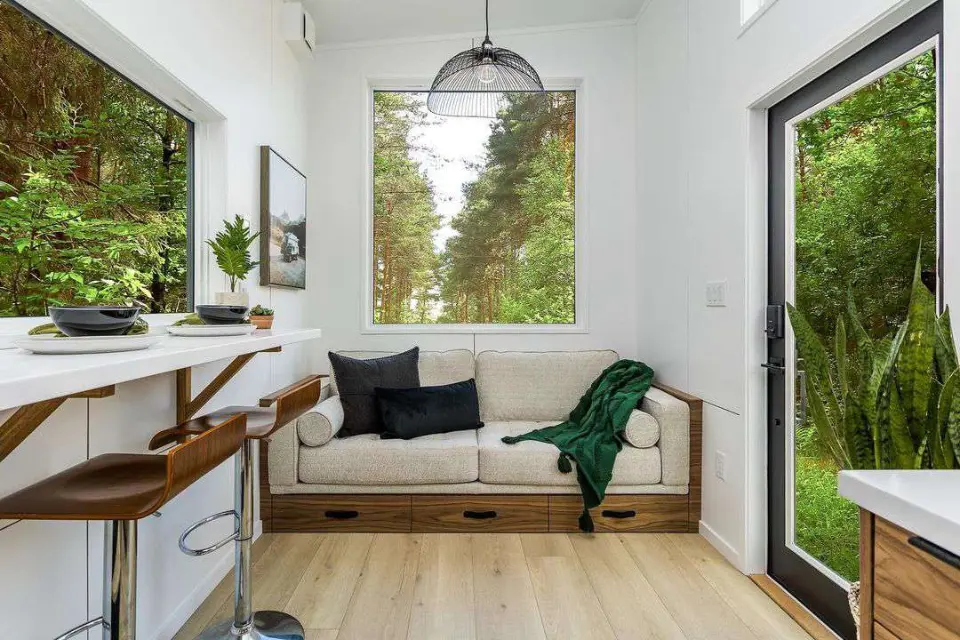
In a nutshell :
- In a property market like Luxembourg's, every square metre counts, it is essential to make use of wasted space to maximise the value of your home.
- Create an office corner, a relaxation area or even add a small bathroom can transform these wasted spaces into useful and pleasant areas.
- Use smart storage, modular furniture and a minimalist approach to visually enlarge and optimise space.
Table of contents
It's no surprise that property prices in Luxembourg are high. If you're lucky enough to be a homeowner, you know that every square metre of your home is precious (very precious!).
So it's important to transform these wasted spaces and make the most of every available surface, especially if you want to resell or let your property (which will increase its value).
Here are a few examples practical tips and ideas for transforming wasted space into functional and pleasant areas.
Find an idea for an extra room
The first step in optimising your wasted space is to determine its potential and decide how it should be used.
Here are some popular ideas for transforming unused square metres:
- Creating a small office area : With the rise of teleworking, having a corner office at home has become essential (and, to put it bluntly, very pleasant!). Even small, wasted spaces can be transformed into functional offices with the right layout and furniture.
- Create a reading, yoga or relaxation cornerA nook, landing or small corridor can be ideal for a reading corner or relaxation area. Adding a few comfortable armchairs, a yoga mat, subdued lighting and some storage units can be enough to create an oasis of calm in your home.
- Creating additional functional spaceDepending on the configuration of your home, you can create an extra WC, a small bathroom, a mini-kitchen or even a guest bedroom from your wasted space. This may require more extensive work, such as installing plumbing or electricity (and will therefore be more expensive than installing an office or reading area). However, installing additional WCs is common practice in Luxembourg.
- Lighting up and brightening up the spaceThe idea is not necessarily to create an extra functional space, but simply to visually open up the space with mirrors, murals, pictures or plants. A fresh coat of paint in light tones and well-chosen decorations can transform a narrow, dark space into a welcoming area.
Lost space: optimisation techniques
To make the most of your wasted space, the area must appear larger and more practical than it really is.
Here are a few tips to help you get there:
- Use smart storage
- The wall-mounted storage units, hanging cupboards and furniture with built-in storage units are your best allies. They keep the space clear while offering plenty of storage capacity.
- For example, floating shelves can free up floor space, while built-in cupboards can make use of nooks and crannies that are often overlooked. The result is more storage and more space.
- Make the most of every available space
- Make the most of your lost space. Corner shelves, folding desks and multi-purpose units can turn even the smallest corners into useful areas.
- For your small bedrooms or reading areas, use a bed with built-in drawers or a sofa with storage space under the seats. It's easy to save space.
- Always adopt a minimalist approach
- Keep only what you need within easy reach and store the rest in designer containers such as baskets or boxes. The fewer objects are visible, the larger and more orderly the space will appear. If you leave the objects visible, the space will look busy, and you'll get the opposite effect of what you're looking for (i.e. to create a useful area while opening up the space).
- Use light colours and furniture with clean lines to accentuate the feeling of space and available volume.
- Don't hesitate to use modular furniture
- You can decide to dedicate a zone to several uses. For example, a corner under an attic can become an office during the day, a reading corner in the evening and a guest room at night.
- Multi-purpose furniture, such as sofa beds and extendable tablesThese can be used to transform a room according to the needs of the day. Another example: if you take a desk that converts into a dining table, you can optimise the use of the same space.
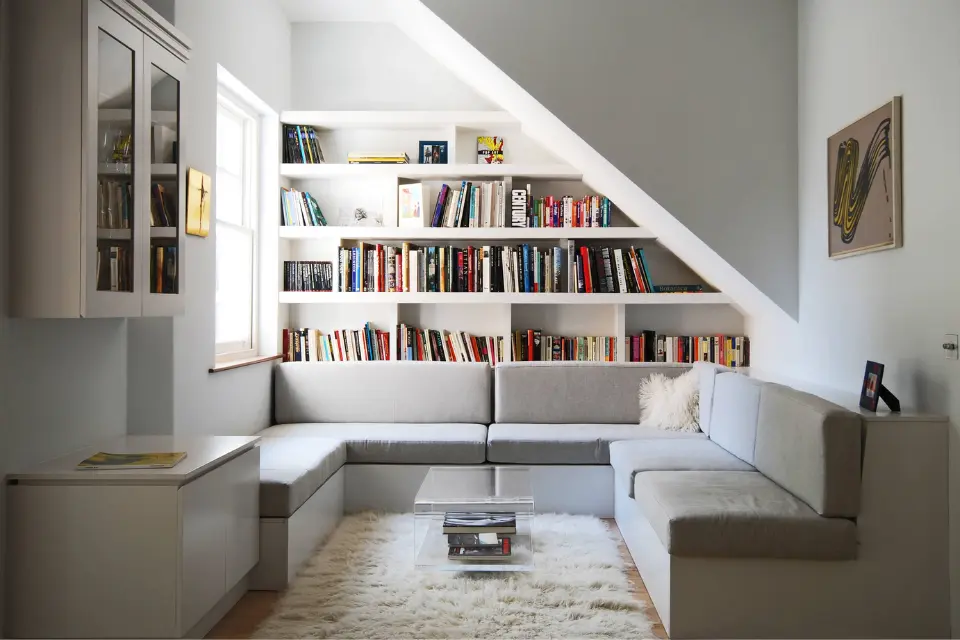
Some inspiration for your lost spaces
Here are a few ideas to inspire you to optimise every corner of your home and make the most of your wasted space.
Creating a living room or small dining room
- Use nesting tables and modular furnitureNesting tables can be stored under a larger table when you don't need them. Modular furniture, such as a sofa that converts into a bed, is also very practical for creating a mini-lounge or small dining room.
- Use the wallsYou can even install wall-mounted fold-down desks to free up floor space and make the room more functional. You can even install fold-down wall desks to free up floor space and make the room more functional.
- Use mirrors to visually enlarge the spaceMirrors: Mirrors reflect light and give the illusion of a larger space. Place them strategically to maximise this effect.
How can I save space in my bedroom?
Here are a few tips to make your bedroom look bigger than it really is.
- Use beds with built-in storageStorage: This is an absolute necessity if you want to make the most of the space in your bedroom. Under-bed drawers or a headboard with built-in shelves can provide extra storage space without taking up extra floor space.
- Install built-in cabinetsUse built-in cupboards that go all the way up to the ceiling to maximise the storage space available. Sliding doors are also an excellent space-saving option (so the doors don't take up space when you need to open them).
- Use folding furnitureFolding furniture, such as folding desks or folding beds, can be stored away when not in use, freeing up space for other activities.
How do you design an optimised kitchen?
- Optimise cupboards and drawersA kitchen has lots of storage space. To avoid it appearing visually overloaded, use drawer organisers, extra shelves inside cupboards and utensil holders. In this way, you can maximise the space available without visually overloading the room.
- Install multifunctional kitchen islandsA kitchen island with built-in shelves and drawers can provide extra preparation space as well as serving as a storage area.
- Use compact appliancesChoose compact or built-in appliances to save space without sacrificing functionality.
How to optimise a bathroom?
Optimising a bathroom requires intelligent use of space and innovative storage solutions. Here are a few ideas to help you maximise the efficiency of your bathroom:
- Install hanging furniture Wall-hung furniture, such as washbasins and wardrobes, frees up floor space, making the bathroom more spacious and easier to clean.
- Use the available vertical space Make the most of the walls by installing shelves above the door, wall hooks for towels and corner shelves. This makes the most of every available square centimetre.
- Consider using clever storage accessories Use hanging shower baskets, corner shelves and storage boxes to keep toiletries organised and accessible.
How can you optimise your outdoor space?
Optimising outdoor spaces, such as balconies and gardens, can transform these areas into functional and aesthetically pleasing havens. Here are a few suggestions for making the most of your outdoor space:
- Use folding furniture Use folding furniture and vertical storage units to maximise space. Hanging planters and trellises add greenery without cluttering up the floor.
- Create discreet storage areas Create discreet storage areas for garden tools using compact garden sheds or outdoor storage boxes.
- Use modular outdoor furniture Outdoor furniture: Use modular outdoor furniture to easily transform the space to suit your needs. A garden table that converts into a bench can provide both a dining area and a place to relax.
And for even more inspiration, take a look at how Tiny Houses are furnished (example here). These small houses make ingenious use of every square centimetre, optimising wasted space in a remarkable way.
How much does it cost to fit out wasted space?
The cost of fitting out small lost spaces can vary considerably depending on the complexity of the project.
Here are the estimated costs for different types of projects:
- Fitting out an office area: €500 to €2,500. Costs include the purchase of ergonomic furniture, storage and possibly electrical work to install additional sockets.
- Creating a relaxation area or mini-gym: €1,000 to €4,000. This budget covers furniture, carpets, accessories and possibly gym equipment such as a treadmill or weights.
- Fitting a bathroom or mini-kitchen: €7,500 to €15,000. The higher costs are due to the plumbing, electrical and tiling work required. Equipment and finishes can also influence the total cost.
| Fitting out lost spaces | Prices |
|---|---|
| Installing an office area | Between €500 and €2,500 |
| Relaxation area or mini-gym | Between €1,000 and €4,000 |
| Fitting out a small bathroom | Between €4000 and €7000 |
| Kitchenette layout | Between €3000 and €8000 |
Conclusion
Optimising every square metre of your home is not only an economic necessity in an expensive property market like Luxembourg's, but also an opportunity to make your living space more functional and enjoyable.
By using these techniques to optimise your wasted space and choosing the right storage and decoration solutions, you can transform these wasted spaces into useful and attractive areas.
To take your project one step further, estimate the price of your extension online.
FAQ: Frequently Asked Questions
Why use wasted space in your home in Luxembourg?
With property prices continuing to rise in Luxembourg in 2026, every square metre becomes precious. Optimising wasted space means maximise the functionality of your home and significantly increase its market value.
How do you create an office corner in a small space?
Choose compact, multifunctional furniture such as a folding or built-in desk. Use wall shelves to optimise storage and free up floor space, while ensuring good natural lighting.
What techniques can be used to visually enlarge a space?
To create the illusion of space, use light colours and mirrors that reflect light. Opt for wall and wall-hung storage units while keeping the decor minimalist to avoid visual clutter.
What are the advantages of modular furniture for optimising space?
Modular furniture is can be converted as requiredlike a sofa bed or extendable table. They allow you to maximising the use of limited space and easily adapt them to everyday activities.
How can you transform an outdoor space such as a balcony or terrace into a functional area?
Use folding furniture and vertical storage units to maximise space. Install hanging planters and trellises to add greenery without cluttering up the floor, and opt for modular outdoor furniture.